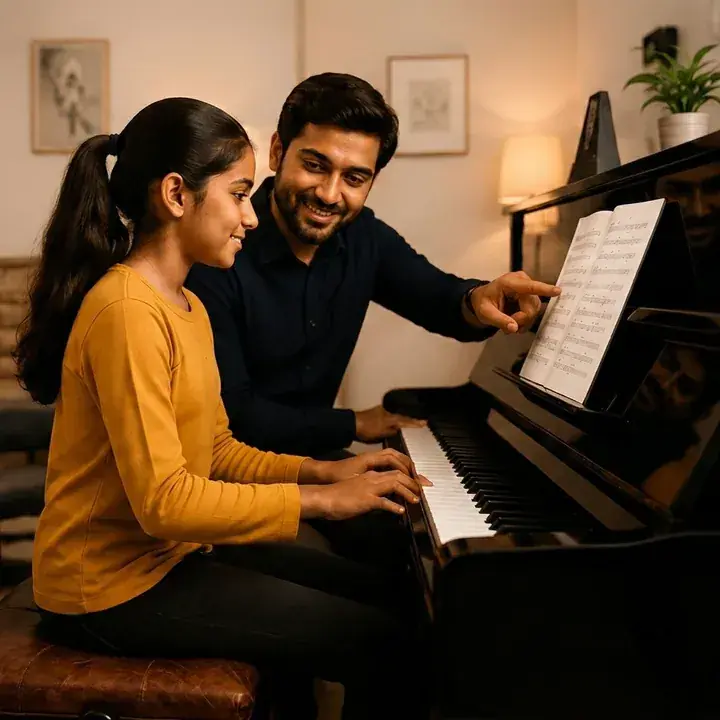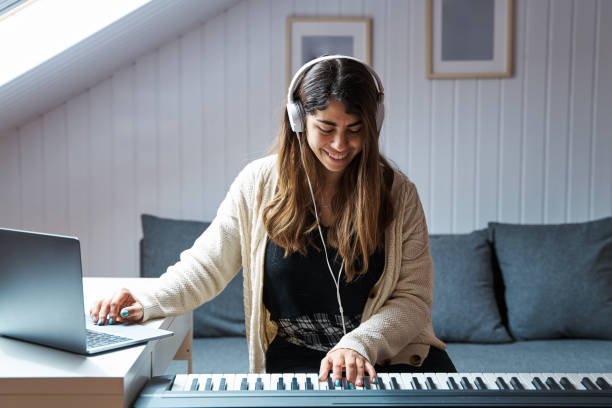
Learning piano online does not rule out graded exams. Students who take live 1:1 lessons with a Kraga teacher work towards the same Trinity College London and ABRSM piano grades as anyone else; what changes is how the entry and the exam itself are organised. This guide explains the choices an online candidate has, what the teacher handles, and what the family handles.
Two boards, one graded path
Trinity College London and ABRSM both run graded piano exams from the early grades up to Grade 8, and Trinity's path starts with an Initial grade designed for young beginners. At each grade the student prepares a set of pieces and technical work, and the face-to-face exams add supporting tests such as sight-reading and aural skills.
Our teachers prepare the full syllabus for either board. You can read how we approach Trinity piano exam preparation and ABRSM piano exam preparation, and the trial class is a good moment to ask which board suits a particular student.
Face-to-face or digital
Both boards hold face-to-face practical exams through their own venues and registered centres, on dates they set. Both also offer digital exams, where the student records the performance at home and submits the video online. For online students the digital route is often the practical one, because the exam is played on the same instrument the student practises on every day.
The two formats do not always assess exactly the same things, so the teacher compares the current requirements for each and recommends the format that fits the student. Venues, session dates and entry deadlines are set by the boards, not by Kraga, so we check the current calendar for your country with each family once a student's pieces are ready.
What the teacher does and what the family does
The teacher plans the route through the syllabus, prepares the pieces, scales and any supporting tests, runs full practice performances in lessons, and tells you when the student is ready and which format suits. For a digital exam, the teacher also goes through the board's published recording rules with you, so the video meets them first time.
In most cases the family makes the entry directly with the board or its local centre and pays the entry fee to the board. For a face-to-face exam, the family also arranges getting the student to the venue on the day.
Fitting exam preparation around the school year
School calendars differ from country to country, but the pattern is the same everywhere: long stretches of steady progress, then weeks when school exams take over. We plan around whichever calendar the student follows, with a lighter routine in busy weeks so the skill stays alive without adding pressure. Our guide to piano practice during school exams shows what a lighter week looks like.
Kraga lesson programmes include two free reschedules each calendar month with 24 hours' notice, which covers most clashes with school exams, concerts and travel.
A trained ear is a head start
Many students come to piano after singing or playing another instrument, including students trained in Indian classical music. That background helps: a trained ear and a sense of rhythm carry straight over to aural tests and to shaping a phrase. Western piano then adds staff notation, two-hand coordination and harmony, so it can sit alongside other musical training rather than replace it.
What you need at home
A piano or keyboard, a phone, tablet or laptop with a camera, and a stable internet connection. By the middle grades a full-size 88-key instrument with weighted keys makes the exam pieces playable as written. Place the camera to the side so the teacher can see both hands; for a digital exam, follow the board's own camera and audio guidance.
To see how lessons are structured, read about our online piano classes. When you are ready to start, book a free trial class and ask the teacher about the exam pathway.
Frequently Asked Questions
Can I take a Trinity or ABRSM exam if I learn piano online?
Yes. Online students work through the same syllabus as any other candidate and can enter for a face-to-face exam at a venue or, with both boards, a digital exam recorded at home.
Is a digital exam easier than a face-to-face exam?
Not necessarily. The digital formats can differ from face-to-face exams in what is assessed, so the teacher compares the current requirements and recommends the format that suits the student.
Who enters the student for the exam?
In most cases the family makes the entry directly with the board or its local centre and pays the entry fee to the board. The teacher confirms when the student is ready and which grade to enter.
How do I know when a student is ready for an exam?
The teacher tracks pieces, technical work and supporting tests against the syllabus and runs full practice performances in lessons. When those are consistently secure, the student is ready to enter.
Online lessons and graded exams fit together well. A certified teacher prepares the syllabus and tells you when the student is ready, the board sets the dates and the format, and the student plays on the instrument they know best. Whether the goal is a first Initial grade or Grade 8, the path is the same as for any other candidate.